House Rental in Phuket
In Phuket, renting a house and renting a villa mean the same thing: a detached home with its own yard and, almost always, a pool. In low season, May to October, a search takes from a few days to a couple of weeks; for December to March, good houses go months ahead and by November you choose from what is left. Searching only for 'house' is a mistake, because it hides the same homes listed as villas.
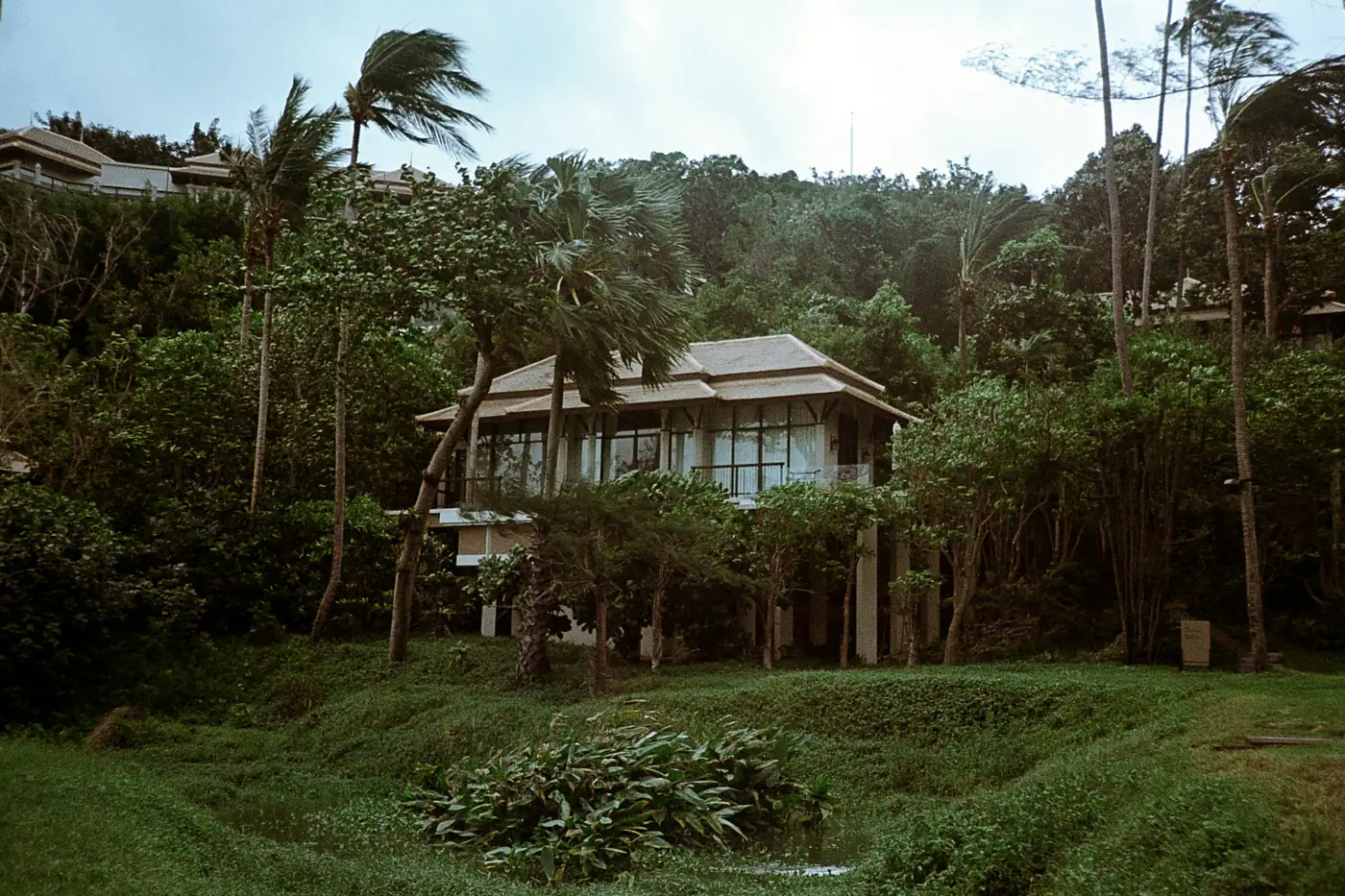
Updated 28 September 2026
- Is a house different from a villa or a bungalow?No.
- How long does the search take?It depends on the season.
- Where do people get burned?In three places.
In this article
Is a house different from a villa or a bungalow?
No. All three words mean a detached home, not a flat. 'Villa' sounds more expensive, 'house' more familiar, and 'bungalow' usually means a smaller single-storey one. The difference is in how the listing is written, not in what you get.
The real differences run along other lines: how many floors, whether there is a pool, the size of the plot, and whether the house stands in a gated estate or on its own. Those are the things worth naming when you search.
Describe your scenario in the chat: how many people, how long, and what matters most, beach, quiet, amenities or budget. We send houses we have seen in person, and for each one we say what might not suit you, from stairs to road noise to a pool that gets sun for an hour and a half a day.
How long does the search take?
It depends on the season. In low season, from May to October, a few days to two weeks is normal: there is plenty on offer, bargaining is possible and you can see houses in person. In high season it is another world. Good houses for December to March go months ahead, sometimes a year, and by November the choice is whatever is left.
If you plan to spend the winter, search in summer. The best route of all is to come in low season, live a month in an area you like, and book the winter house on the spot after seeing it.
TipBetween 'found online' and 'moved in' there should always be a viewing. Houses that look identical in photos differ in water pressure, noise and what goes on over the fence.
Where do people get burned?
In three places. Distance to the beach measured in a straight line instead of the real route: there is often a hill between house and sea, and three hundred metres turns into fifteen minutes uphill. Building work next door: the island is growing fast, and an owner's photos never show the excavation. Electricity bills: on a long stay, air conditioning produces a bill nobody expected if the tariff was not named up front.
The fix is the same for all three: ask before you sign, and see the house yourself or on a fresh video.
- Walk the route to the beach, don't trust metres on a map
- Ask what is happening on the neighbouring plots
- Get the electricity tariff before signing
- Photograph the meter on move-in day
- Agree the pool and garden service schedule
- Read the deposit return and early-exit terms
What does a viewing actually involve?
A short list of checks that takes about fifteen minutes and removes most future surprises. Water: run the upstairs shower while the tap downstairs is open; weak pressure now means every family morning will be like that, so ask about a storage tank and pump. Electrics: switch on every air conditioner at once, because houses once let by the week sometimes have wiring that cannot take constant load.
Sound: stand silently in the yard for a minute and listen for the road, a neighbour's generator, machinery on the next project. Day and evening differ, so come twice if you can. Light and shade: see where the sun falls on the terrace and pool, since a badly oriented house makes the terrace unusable at the nicest hours. Damp: open wardrobes and look under sinks; a musty smell says more about ventilation than any promise.
Estate house or a plot of your own?
Most houses in Phuket stand in organised estates: a shared entrance, guards, street lighting, rubbish collection. In exchange you get neighbours a few metres away and rules to follow. A house on its own plot gives quiet and privacy, but all the upkeep becomes your concern: garden, drainage, the gate, sometimes a private well. For a family, a small estate of a few houses is often the practical middle: shared services without feeling like you live on a housing development.
Whichever you choose, ask who looks after the outside of the house, and ask for a name and days rather than a promise of service.
Two offers at the same rate can include very different things, and the gap adds up on a long stay. Pool and garden service are usually in; weekly cleaning sometimes; internet less often. Electricity on stays of a month or more is almost always billed separately by the meter. Transport, a local SIM card and bottled drinking water you normally sort out yourself in the first week.
Worth knowingThe costs that surprise people are the small ones: pool chemicals, rubbish bags, light bulbs, cooking gas. Ask not 'how much is it' but 'what is included and who pays for what'.
Which area fits which kind of stay?
For a beach and calm, the south: Nai Harn, Rawai and around. For amenities and plenty of restaurants, Bang Tao. For quiet with a view, the slopes of Surin and Kamala. For budget and space, Chalong.
One pattern holds everywhere: the closer to the sea, the pricier and tighter the plot. A house five minutes further from the water is almost always roomier for the same money. And think about a car early, because the areas where everything is walkable can be counted on one hand, and houses there cost more.
Questions people ask
Is a house different from a villa in Phuket?
No, it is the same thing: a detached home with its own yard. 'Villa' sounds more upmarket, 'house' more ordinary, but the homes on offer are the same.
How long does it take to find a house?
In low season, from a few days to two weeks. High season is booked months ahead, and by November you choose from what is left.
We can't fly out to view first. Is renting blind a mistake?
It is how surprises happen: water pressure, noise, building work and the real road to the beach do not show in photos. If you cannot come, ask for a walk-through video of the house and yard.
Do we need a car?
Almost always. Areas where everything is within walking distance are few, and houses in them cost more.
Is a house by the sea or further inland cheaper?
Inland. The drive difference is often five minutes, while the plot is noticeably bigger for the same money.
What if something breaks during our stay?
Agree it up front: who pays for the technician, how fast they come, and whether spare parts are in the house. On a long stay it will come up.
Send your dates — we will send villas that fit
Area, dates, how many adults and children. We reply in writing, with the house, the terms and the deposit spelled out before you book.